A home for authentic Montessori in India.
A shared institutional home for trained directresses, prepared environments, and the founder-run schools that carry Maria Montessori’s method honestly. Convened now, with a founding circle of schools, funders and advisors.
From a cottage in Kodaikanal
Montessori is, in the deepest sense, already Indian.
Maria Montessori spent seven years in India, ran sixteen training courses, and trained over a thousand Indian guides. Cosmic Education — the framework that now shapes Elementary Montessori worldwide — was written in a hill-station cottage called Rose Banks.
The Indian provenance of authentic Montessori is not a discovery. It is a fact that has simply been allowed to fade — while the name has been more widely used than it has been honoured. The Collective carries that thread forward, and takes its institutional name from the cottage where the most distinctively Indian contribution to Montessori thought was made.
Her Indian years, in three numbers
Why the Collective exists
To restore the meaning of one word.
Montessori — in the country where Cosmic Education was first written.
Authentic Montessori — an AMI- or IMC-trained directress, a real prepared environment, mixed-age communities, an uninterrupted three-hour work cycle — has stood largely outside the national pre-school expansion in India. The reasons are structural, not accidental.
Capital alone does not build a Children’s House. Trained adults do.
The result is a sector of small, scattered, founder-run schools — many of them excellent, almost all of them isolated, and collectively invisible.
The Montessori Collective is being formed to give that work a shared institutional home: not by out-spending the wider pre-school sector on advertising, but by building something it structurally cannot — a credible, verifiable, parent-recognisable mark of authentic practice, and the network of teacher-led schools to carry it.
Our standard
Three things, checked at every observation.
A school that stops meeting them stops being a member school.
A trained directress in every room
A recognised AMI or IMC diploma, at the age level she guides, and in the classroom day to day. Not an assistant working from a manual.
The full three-hour work cycle
Uninterrupted. No worksheets, no rewards, and no timetable cut into periods.
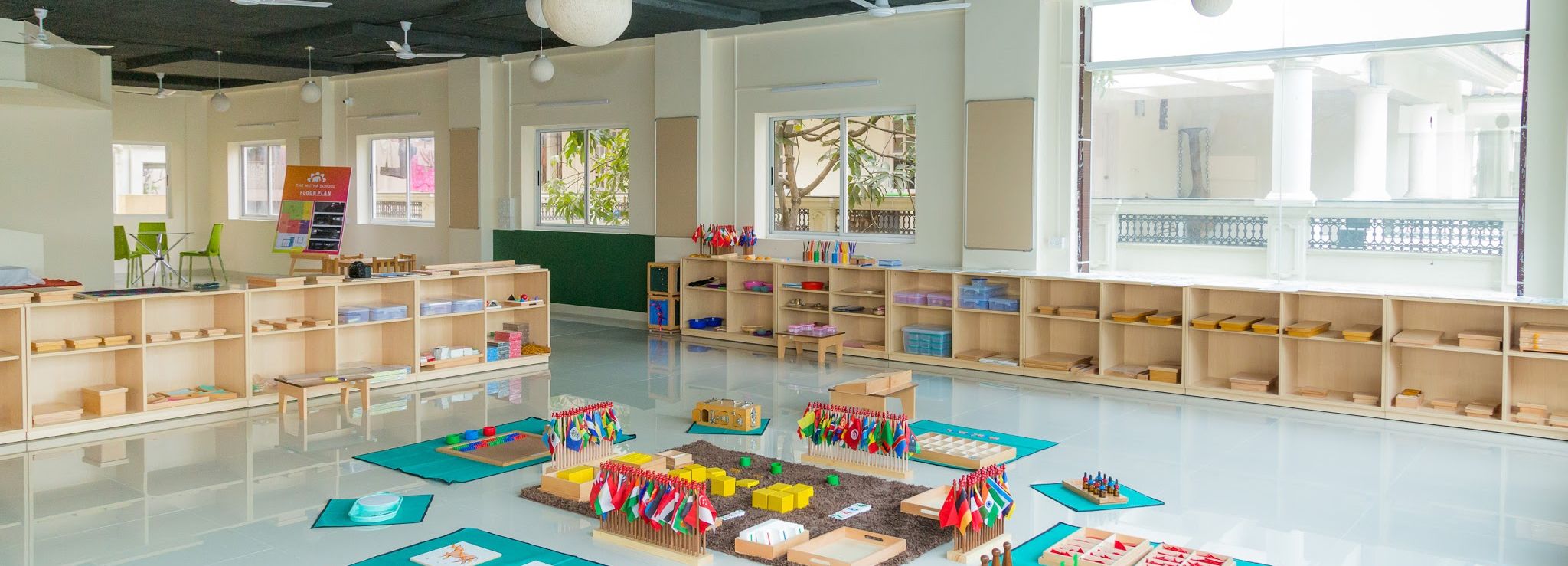
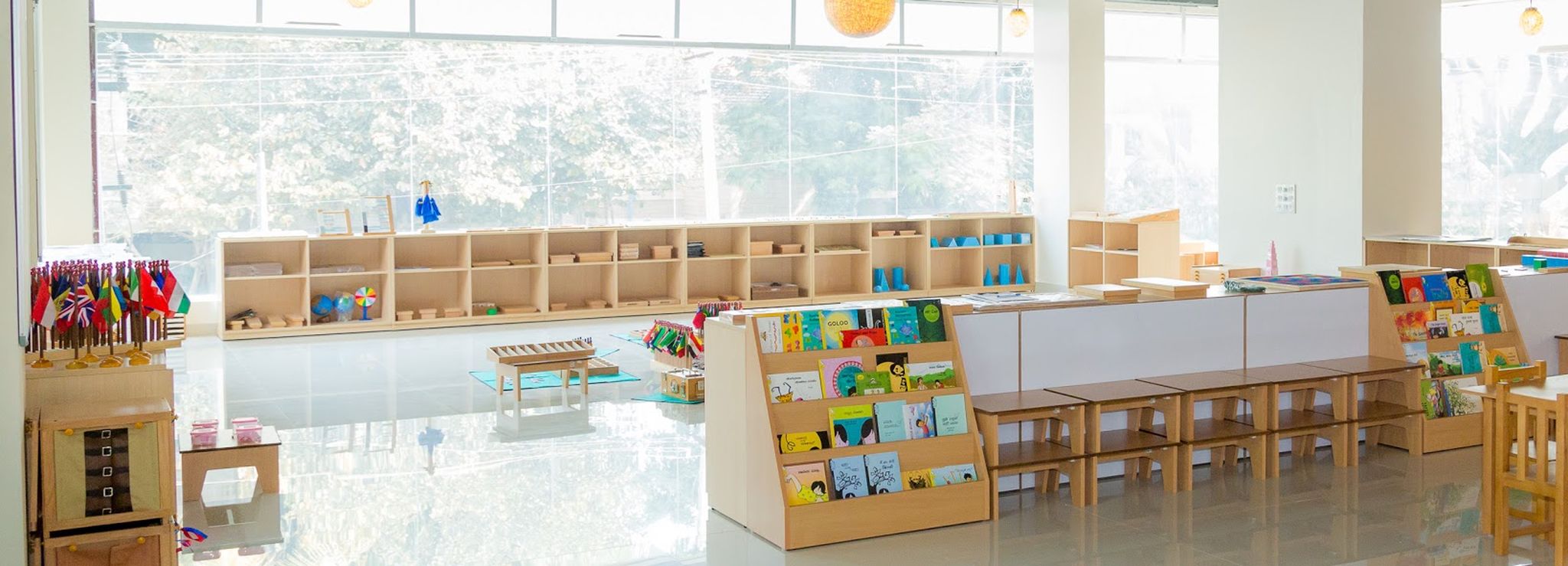
A complete prepared environment
Parents can observe the classroom their child is in. So can an assessor, against the rubric, every three years.
The Mark
Written down, so it can be argued with.
The Mark is being drafted as a published, observable, parent-readable standard for authentic Montessori practice — aligned with AMI and IMC recognition, adapted to Indian conditions, and re-verified every three years.
It rests on nine domains, from the credential of the lead directress to the rhythm of the day, from the prepared environment to the way families are partnered with. Working Draft v1 is being reviewed by senior Montessori educators before it is applied to any school.
The three clocks
Annual. Continuing professional development for every directress and assistant.
Every three years. Re-observation of each member school against the rubric.
Every three years. Review of the standard itself, against current Montessori scholarship and Indian regulation.
Help me to do it myself.
Maria Montessori
The plea the method is built to answer — and the test every prepared environment still has to pass.
The Incubator
If you want to open a Children’s House, we build it with you.
Not a franchise fee and a manual. You keep your school and your name.
-
01
You bring the diploma and the commitment
An AMI or IMC diploma at the age level you intend to guide, and a commitment to the full uninterrupted work cycle.
-
02
We take the entity, the premises and the fit-out
Legal registration, the lease, statutory compliance and the build — the operational load, taken off the directress.
-
03
The environment is prepared to the standard
Materials at network rates, laid out and checked against the rubric before a single child arrives.
-
04
You open, and join the review like every member school
Observed against the same published standard, on the same three-year clock. No school is exempt, including the convenor’s own.
-
05
Shared services stay with you
Admissions and parent enquiries, back-office and accounts, continuing professional development and training days.
How the Collective is being built
Three layers, in order. Each one earns the next.
Year 1–2
The Incubator
Identify AMI- or IMC-trained directresses who want to lead their own schools but lack the operational, legal, financial and real-estate capability to do so. Provide a structured incubation pathway in exchange for joining the network. First launches in Chennai and Bangalore.
Year 2–3
Shared services
Bulk procurement of Montessori materials, joint parent-education programmes, shared digital and content presence, back-office support, continuing professional development. The work no individual school can do alone efficiently.
Year 3+
The Mark, parent-facing
The standard is published, the Mark is issued, and the brand goes parent-facing — but only when the network behind it can withstand parental scrutiny. A quality mark is only as trustworthy as the weakest school permitted to carry it.
Applications for the founding cohort open on 1 September.
Schools, funders and directresses. Cohort 1 closes on 15 October 2026 — eleven questions, asked one at a time, and a personal reply within a fortnight.