Heritage · Indian provenance
From a cottage in Kodaikanal.
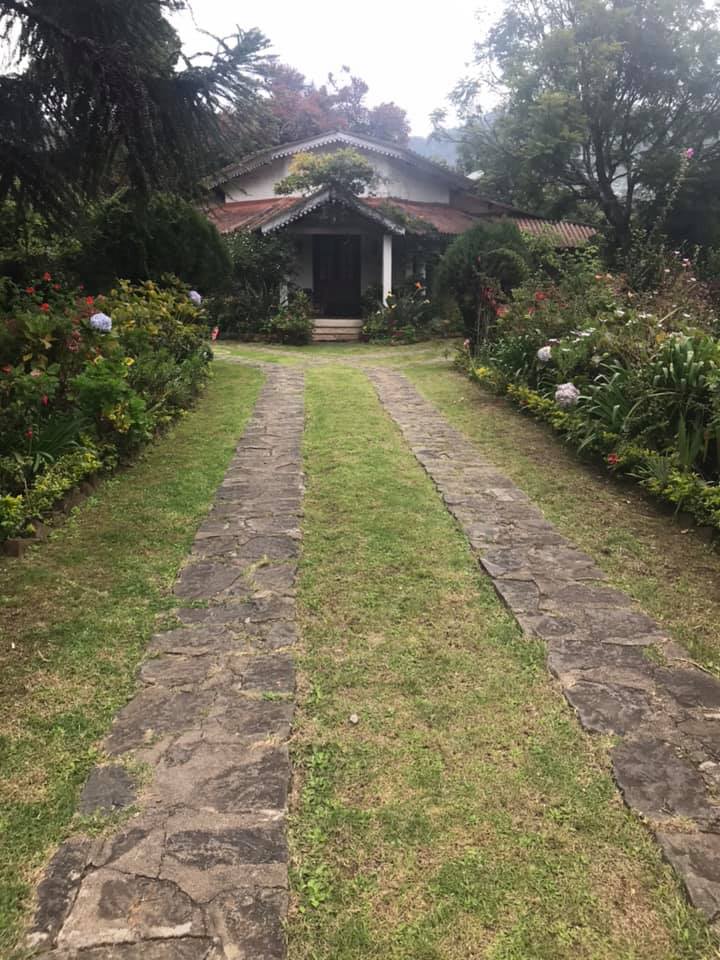
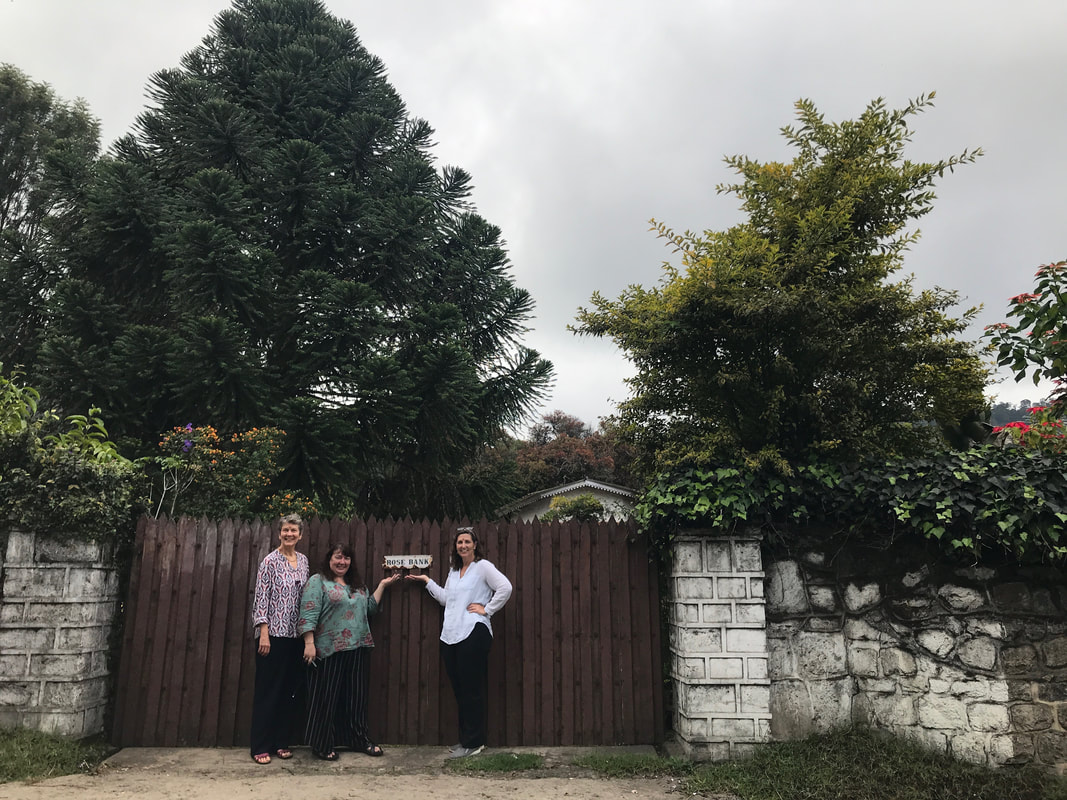
Montessori is not a method India imported. It is one India helped make. The work of The Montessori Collective is held by RoseBank Foundation — a Section 8 not-for-profit that takes its name from Rose Bank, the hill-station cottage where Maria Montessori lived through the 1940s, and where she developed Cosmic Education during her seven years in India.
1939 · Arrival
The first Indian course, at Adyar.
In late 1939, Maria Montessori and her son Mario travelled from Europe to India at the invitation of the Theosophical Society to deliver a Montessori training course in Adyar, Madras. The intended visit was a few months; the Second World War made it seven years. As Italian nationals in a British dominion at war with Italy, mother and son spent much of the period under restrictions on their movement — and used those years to do some of the most consequential work of Maria’s life.
The Adyar course, which began in December 1939, was the first Montessori training course held on Indian soil. It drew teachers, principals and educators from across India, including many who would go on to lead the early generation of Indian Montessori schools.
1944 · Kodaikanal
Rose Bank, and Cosmic Education.
From around 1944 onwards, Maria spent her summer months at Rose Bank — a small bungalow in the hill station of Kodaikanal in the Palni hills of Tamil Nadu. The setting was deliberate: in the cool air and quiet of the hills, away from the heat of the plains, she did the writing and the thinking that became Cosmic Education — her vision for the work of the six-to-twelve-year-old child.
Cosmic Education was not invented in Europe. It was developed, in its full form, in India — out of the encounter between Maria’s already-mature understanding of the absorbent mind and the older child she was now teaching; the natural landscape of the Palni hills; and her conversations with Indian teachers and thinkers. The Great Lessons that frame Elementary Montessori around the world today — the coming of the universe, the coming of life, the coming of human beings, the story of writing, the story of numbers — took their shape in Kodaikanal.
“Help me to do it myself.”
— the child’s plea, as Maria heard it.
1939–1946 · The Indian courses
Sixteen courses. Over a thousand Indian guides.
Across her years in India, Maria and Mario conducted sixteen training courses — at Adyar, Kodaikanal, Ahmedabad and Karachi — and trained more than a thousand Indian directresses and assistants. Many of those trained went on to establish Children’s Houses across India, particularly in the south. The Indian Montessori Centre (IMC), now headquartered in Bangalore, traces its roots to that generation.
Why this matters now
The Indian provenance of authentic Montessori is not a discovery. It is a fact that has simply been allowed to fade — while the name has been more widely used than it has been honoured. The Collective carries that thread forward, and is named for the cottage where the most distinctively Indian contribution to Montessori thought was made.
After 1946
Return, and afterwards.
Maria and Mario left India in 1946. Maria returned briefly in 1948 to deliver another course before her death in the Netherlands in 1952. The cottage at Rose Bank still stands in Kodaikanal, on land now associated with the local educational community there.
A note on sources
This page summarises the public record. The principal sources are E. M. Standing’s Maria Montessori: Her Life and Work, Rita Kramer’s biography of Maria Montessori, the published archives of the Association Montessori Internationale and the Indian Montessori Centre, and contemporary accounts of the Adyar and Kodaikanal courses. We are happy to extend, correct, or refine any of the above on the strength of better evidence; please write to us.
One name. Two threads.
The first thread is heritage — the seven years in which an Italian doctor and her son, exiled to India by the accidents of war, did some of the most original work of their lives among Indian teachers and Indian children. The second is recovery — the present effort to restore the meaning of the word “Montessori” in the country where Cosmic Education was first written.